

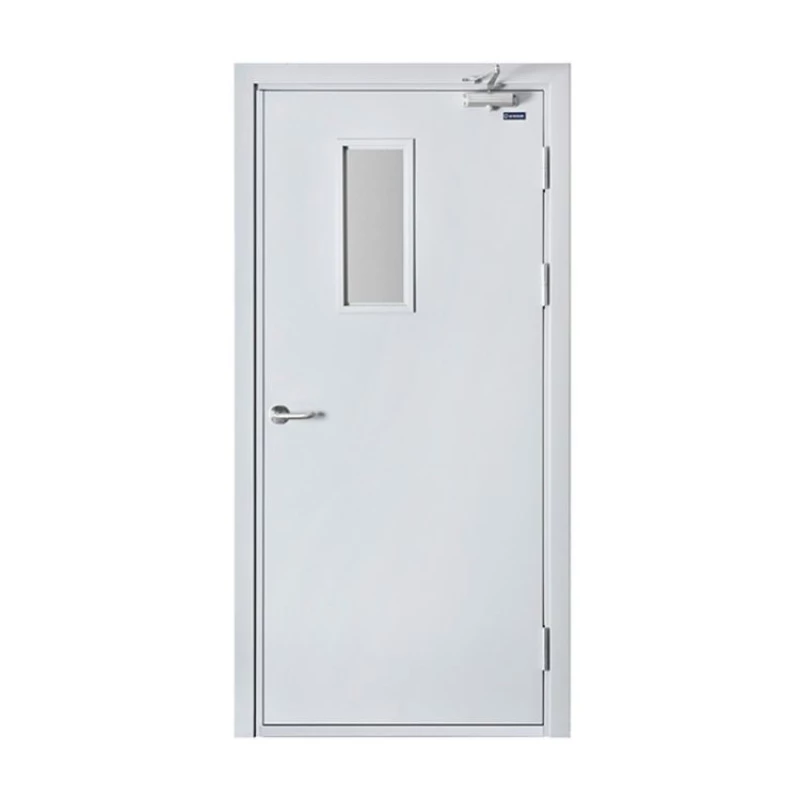
Factory Price Steel Fire Prevention Door
- Supply Type
- Original Manufacturer, Odm
- Sample
- Yes
- Transport Mode
- Sea, Land, Air, Express, Others
- HS Code
- 7308300000

Product Description
Product Details
| Standard Size | 2050*960 (Accept Customization) |
| Door Leaf Thickness | 60mm (Accept Customization) |
| Inner Filling | Fire door core board (Accept Customization) |
| Lock Set | High Quality Main Lock+Side Lock+Up-Down Lock |
| Surface Treatment | Poder Coated/Heat Transfer(Customized) |
| Open Direction | Inward/Outward/Left/Right |
| Accessories | Handle; Lock;Hinge;Peephole;Door Bell;Bolts |
Choosing Fire Doors: A Comprehensive Guide
Introduction
Selecting the right fire doors is crucial for maintaining fire safety in buildings. Fire doors play a vital role in preventing the spread of fire and protecting lives and property. This guide will provide a step-by-step approach to help you make informed decisions when purchasing fire doors.
1. Assessing Regulatory Requirements
Understanding the fire safety regulations and requirements specific to your region is the first step in selecting fire doors. Consider the following aspects:
a. Building Codes: Familiarize yourself with local building codes and regulations related to fire safety, including fire door specifications, installation guidelines, and certification requirements.
b. Occupancy Classification: Determine the occupancy classification of your building (e.g., residential, commercial, industrial) to identify the fire rating and other fire door requirements applicable to your specific situation.
c. Accessibility Standards: Consider accessibility requirements, such as door width, hardware height, and ease of operation, to ensure compliance with accessibility standards while maintaining fire safety.
2. Fire Rating Requirements
Identify the required fire rating for your fire doors based on the building's occupancy and designated areas. Consider the following fire rating factors:
a. Duration: Determine the desired duration of fire resistance (e.g., 30 minutes, 60 minutes, 90 minutes) based on local regulations and the specific needs of your building.
b. Compartmentalization: Assess the building's layout and determine the areas that require fire separation. Select fire doors with appropriate fire ratings to create effective fire compartments.
c. Adjacent Hazards: Consider any adjacent hazards or potential fire risks near the fire doors. If the doors are exposed to high heat or hazardous materials, consider higher fire ratings or additional fire protection measures.
3. Material Selection
Choose suitable materials for your fire doors to ensure optimal fire resistance and durability. Consider the following options:
a. Core Material: Select fire doors with a solid core made of fire-resistant materials such as mineral-based cores, fire-rated particleboard, or fire-rated honeycomb cores. These materials provide enhanced fire resistance.
b. Facing Material: Fire doors can feature different facing materials, including wood veneer, steel, or fiberglass. Consider the aesthetic requirements, durability, and maintenance needs when choosing the facing material.
4. Testing and Certification
Ensure that the fire doors you select comply with recognized testing standards and carry appropriate certifications. Consider the following:
a. Third-Party Certification: Look for fire doors tested and certified by reputable organizations like UL (Underwriters Laboratories), FM Approvals, or Intertek. Certification ensures that the doors meet required fire resistance and performance standards.
b. Testing Standards: Verify that the fire doors have undergone rigorous testing according to relevant standards, such as UL 10B, UL 10C, or BS 476. These tests evaluate factors like fire endurance, smoke leakage, and structural integrity.
5. Professional Installation and Maintenance
Engage professional installers experienced in fire door installation to ensure proper fitting and functionality. Additionally, establish a maintenance plan that includes regular inspections, repairs, and necessary upgrades to maintain the fire doors' integrity over time. USELUCK DOOR is a professional supplier, if you have any problems please contact us.


